Introduction
What are trends of visual effects ?
Current trends of visual effects fixates on:
Real time rendering
- Game-engine technology is becoming standard in film, TV, and advertising.
- Directors can preview effects immediately rather than waiting for final renders.
Virtual Production
- LED volume stages and real-time environments (using tools such as Unreal Engine) continue to grow.
- Productions can capture visual effects in-camera, reducing post-production time.
Digital Humans
- More realistic CGI characters, facial animation, and digital doubles are being created for films, games, and virtual influencers.
- Advances in motion capture and machine learning improve realism.
- Harold Egerton works stemmed in 1932 where he identified stroboscopes this is the art of capturing a high speed image in a series of frames – usually what the naked eye does not register.
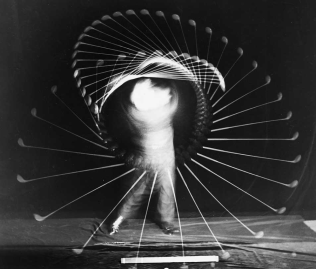
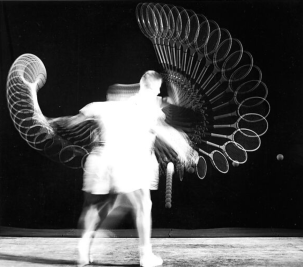
Modern examples and earlier:
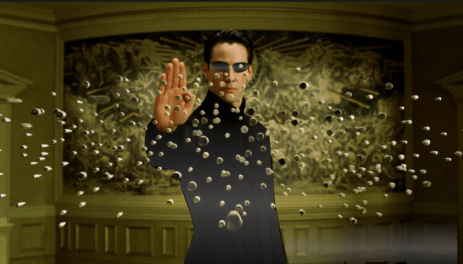
The Matrix (1999)
Stroboscopic effects are used to create the illusion of slow motion as the actor doges the bullets – making his movements appear frozen or slowed while bullets continue moving.
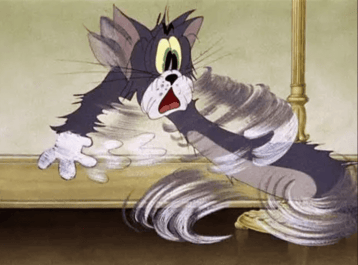
Tom and Jerry (1940s)
In this image stroboscopic effects are made through the us of overlapping motion drawings of Tom’s body & tail to exaggerate rapid movement and make his actions appear blurred/ more comical.
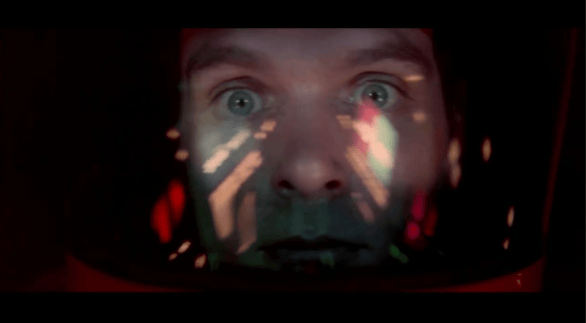
2001: A Space Odyssey “Stargate” sequence
In this particular scene Stargate sequence use fast changing lights, colours and images to make a disorientating illusion of movement and space travel.
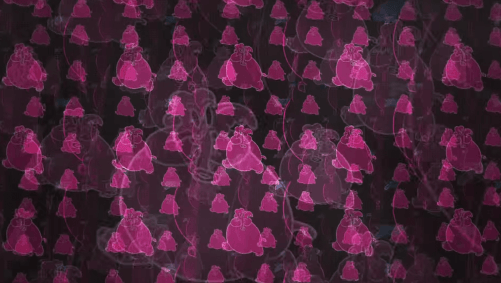
Dumbo (1941)
In this movie the use of repetition and overlapping images of elephants craft a surreal, dreamlike deception of movement and give a hallucination/ disorientating feel through this stroboscopic feature.
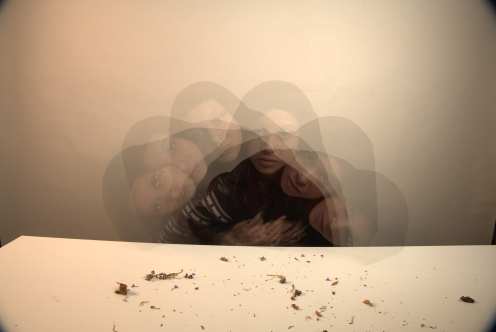
(My image)
This is my own image to replicate the stroboscopic effect, the photo was on a slow show shutter speed in which someone pressed the camera. During the short time frame i moved my head slowly to capture the multiple overlapping positions.

HOMEWORK: What does Dr James Fox mean by ‘The Age of the Image’?
(Reference)
https://learningonscreen.ac.uk/ondemand/index.php/prog/158E7D18?bcast=136974447
In reference, Dr James Fox throughout this clip touches upon images from all sources: including television, social media and the internet etc. Starting off with a painting made by artist Paul Cezanne who became painting in the 1860s – crafted a still life painting of a statue with fruit around it on a table. Fox comments, “the shadows make no sense, “apple the size of a bowling ball’ and ‘ the table’s edges bend and blur.’ Fox could only think of two reasons why Cezanne had done this, one of which Cezanne was not a very good painter or he was trying to open up the 4th dimension. Fox believed that this was the start of the 4th dimension the image captures time it self as Cezanne must of moved around when in the process of producing this work, opening up how the human eye sees certain elements in different lights/ positions and elements – meaning there is not always one fixed objective way viewing the world . Furthermore, from this onwards Fox refers to other artists mirroring Cezanne or evolving there artistry like Harold Edgerton and the Lumiere Brothers. Having said this, what Dr James Fox really means by ‘ The Age of the Image’ is that the period in which images are not simply passive representations of the world (shaping reality).In other words, they have become powerful tools that influence/construct and reshape the way we understand reality – connecting to our emotions, as well as opinions, over time the quality of images has evolved along with the ideology.

Photographic Truth Claim
The Photographic Truth: perceives the photographic truth is the concept that a photograph is viewed as objective evidence of reality, as it captures what is in front of the camera. However, this can be challenged because photos can be staged, manipulated and edited. Results of this can alter our take on reality rather than documenting the truth.
(Image sourced from Google)

(My image)
Plato’s Cave

In what ways is Plato’s Allegory Cave reflected or represented through storytelling and visual effects in cinema ?
Response:
Visual effects shapes a spectators perception by crafting artificial worlds/ altering images to instigate beliefs and emotions .In cahoots to Plato’s Allegory of the Cave, the audience may mistake visual representations for reality without necessarily knowing what lies behind them. The cave is about individuals mis-comprehending shadows for reality, as they have never seen the truth. When one person escapes the cave, they come across the real world for the first time, showing how knowledge can change our prospects of reality. One technique that this reflects this in vfx is through computer generated imagery, CGI replicates realistic illusions that make viewers question what is real and what is not , using storytelling to reveal the truth behind the rise-en-scene (everything upon stage).
How VFX Challenges Photographic Truth
(Key points from in class PowerPoint)
Indexicality – Are there any traces of the real world, or is it fully fabricated?
Iconicity – Does it resemble convincingly, or is it clearly fictional?
Photographic truth – Does it claim to represent reality, and how does this challenge traditional truth claims?
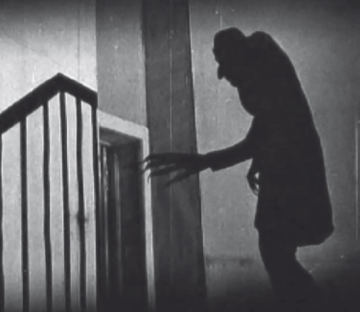
- In this scene the photographic truth makes it feel realistic as it was films with a real actor, physical sets and lighting.
- Iconicity is presented through Nosferatu visible shadow, which showcases him as a scary looking vampire.
- Indexicality is represented by the shadow being crafted when an object blocks the light, simultaneously connecting the image to something physically present in front of the camera.
HOMEWORK: What is do you think is meant by the ‘ Photographic Truth Claim ?’ – Tom Gunning
In ‘What’s the Point of an Index? Or, Faking Photographs, Tom Gunning mirrors that the photographic truth claim is the belief that photographs give proof of reality as they are produced through physical connections between the subject and the camera. In more traditional aspects photography captures light reflected from objects, creating the impersonation that the image is an accurate record of what existed in front of the camera. On the other hand, Gunning proclaims that photographs should not be considered truthful.Eventhough they may resemble real attributes, of real existence, their meaning can be infiltrated by: editing, manipulation, lighting, camera angles and the context in which they appear in. Digital technology has made altering photographs more straight forward, but Gunning brings to our attention that traditional photography can be tampered with. Gunning also states that the photographic truth can be subjective depending on how individuals view it. What i mean by this is, a photo may communicate truth but it can also mislead viewers, like in a picture shown as evidence in a legal case or used in journalism, where its reliability must be examined cautiously. Furthermore, what i really think Gunning means is that photographs are not automatically truthful simply because they represent realism, their relationship to reality gives them possibilities to provide evidence, but their accuracy relies on how they were produced , manipulated and conceived. Tom Gunning challenges us to question photographs over accepting everything that is shown as the truth.
Faking Photographs: Image Manipulation and Computer Collage
Faked Analogue Photograph
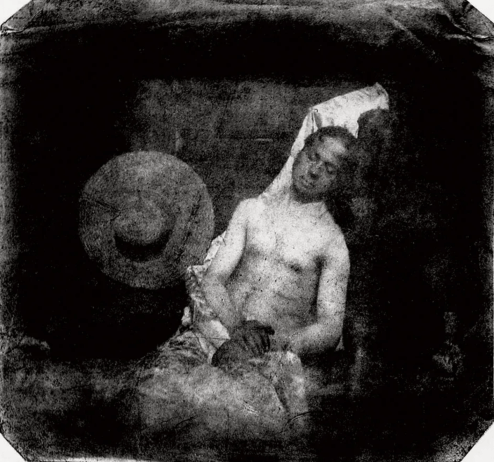
The first hoax photograph was crafted in 1840 by Frenchman, Hippolyte Bayard, he staged a ‘ Self- Portrait as a Drowned Man’.
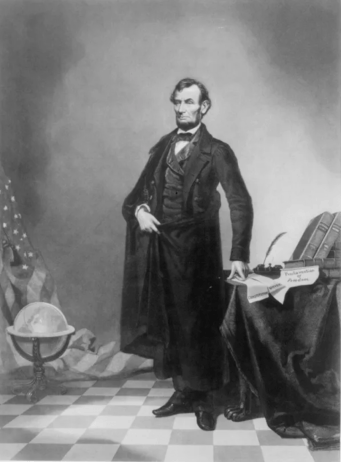
The Standing Portrait of Abraham Lincoln US President at the time, this staged image was taken in 1852 by A.H. Ritchie showing John C. Calhoun, 1852.
The photograph just uses Abraham Lincoln head is superimposed on the figure and background of an earlier
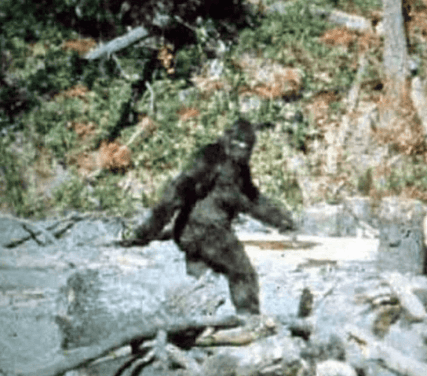
‘Big Foot Spotted in Bluff Creek’; this is a man in a suit crafted in 1967 by Roger Patterson and Bob Gimlin.
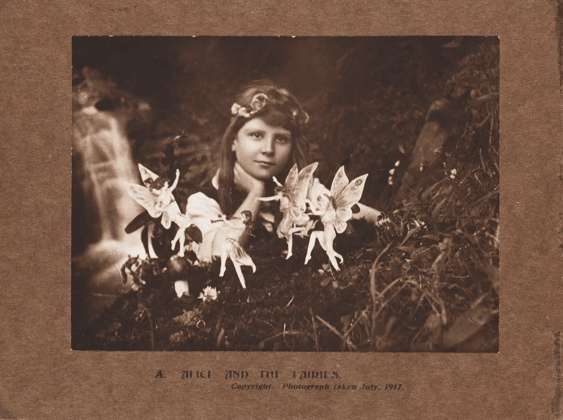
‘Alice and the Fairies’ (1917) – lsie Wright and Frances Griffiths crafted paper cut-outs to make a series of images in the garden of a Cottingley village home.
Faked Shots as Documentary
HOMEWORK: Write a definition of VFX Compositing. What is it and how does it work ?
VFX Compositing is a visual effects procedure that blends two or more separate visual features to craft a believable image. This is broadly used in TV, video games and films to make scenes that could be to difficult/ impossible to authentically do. Compositing is done by combining different layers of images, of footage and digital imagery. This can be done in soft wears like After Effects, Photoshop and Nuke etc, these layers can consist of: CGI, live footage, green screen backgrounds, digital environments and lighting effects. The compositor will carefully assess each attribute to make sure everything is harmonious. One commonly used technique is chroma keying, this is where either a blue or green screen is removed or replaced with another background. For instance, an actor filmed in a studio can be situated in a digitally made setting. Rotoscoping and masks can also be used to get rid of specific objects or individuals, allowing effects to be added or just unwanted elements removed. When it comes to creating the final image to be realistic as possible, compositors adjust: colours, shadows, reflections perspective and lighting. These details go towards helping separate elements comply with each other and make the impression that everything was filmed altogether, if this process does not take place accurately, the audience may pick up on its faulty artificial appearance is significant because it gives the opportunity to filmmakers to build imaginative worlds, create dangerous environments safely and tell stories beyond the limits of regular filming. To demonstrate in ‘ War of the Planet of the Apes’ (2017), digital characters are integrated into a live action atmosphere to create believable interactions between CGI characters and real surroundings.
In Summary, VFX compositing mixes technical skill and creativity to manufacture a seamless final image. Influencing individuals POV of reality by making fictional scenes appear convincing, showcasing the fine line of real and digitaly crafted work.
Exploring different kinds of Photo Real Trends in VFX
What is Photorealism in the context of vfx ?
Photorealism in regards to visual effects occurs when digital effects and computer generated imagery are crafted to appeared realistic as if it were real-life footage, applying accurate shadows, lighting textures and movement so the spectators believe it to be real.
Photo Real examples in VFX:
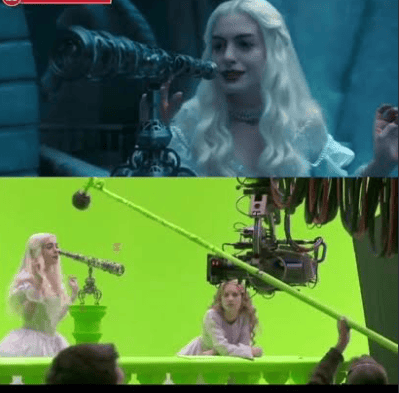
Alice in Wonderland (2010)
Technique: CGI
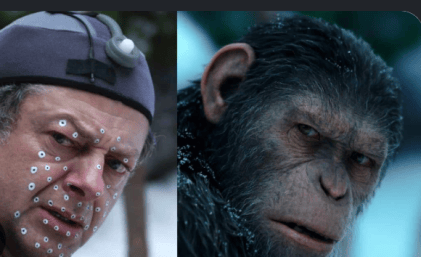
War of the Planet of the Apes (2017)
Motion Capture
HOMEWORK: Write a post on a type of visual Realism
Computer Generated Photorealism
Visual realism in collaboration to visual effects relates to how computer generated imagery is created to look as realistic as possible, results of this, make it harder for audiences to establish between digital replicas and authentic footage. CGI photorealism is achieved by using advanced software and techniques to match the appearance of the real world. These techniques include realistic lighting, shadows, reflections and detailed environments cater into blending computer generated imagery into live action footage seamlessly. Animators also study the natural movements of a person or object (the real world physics of things) and how the light hits certain things/exposure of it. This is significant as, even a minor mistake in detail could make or break an image, therefore, becoming unrealistic. Today photorealism is Widley spread in our day-to-day lives like television and even video games. In order to create believable characters and environments etc. Computer generated creatures for example can be put into scenes alongside real actors (blended in the setting). On the other hand , photorealism can also deceive viewers point of view by making fictional events presented more genuine. This links back to to the concept of photographic truth, as the spectator may trust realistic images without thinking how they were conjured. In summary, CGI photorealism demonstrates how visual effects can blur the boundary between illusions and reality – shaping how overall audiences interpret visual media.
Trends in Capture in VFX
What types of captures ae used in VFX and why ?
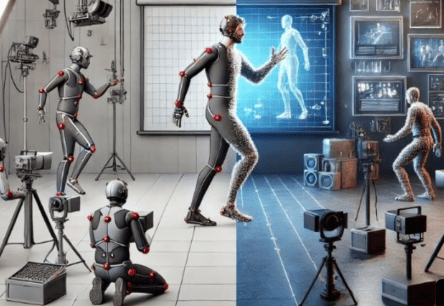
Motion Capture – requires an actor to wear a Mocap suit which traces the movements, this done to produce realism and saves time instead of animating by everything by hand.
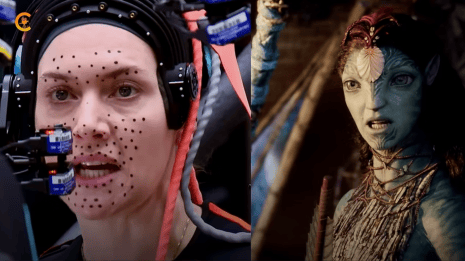
Facial Capture – dots are painted on to the subjects face to pickup the precise movements and muscles in the , cameras then track the dots or in other cases use mark-less facial scanning systems. The concept of this, is to capture realistic emotions and speech, it is significant for animated characters and digital doubles.
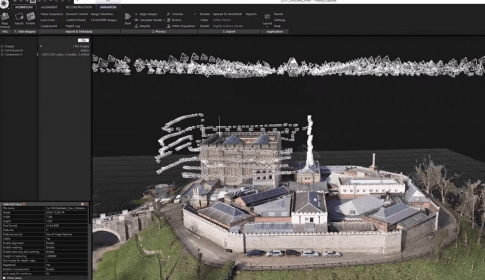
Photogrammetry – involves the use of: 3D shapes, textures of real objects, people, environments or props. This is crafted when hundreds of photographs are taken from an array of different angles and then re-modified into a 3D model, results of this allow highly accurate digital assets and reduces the modelling time.
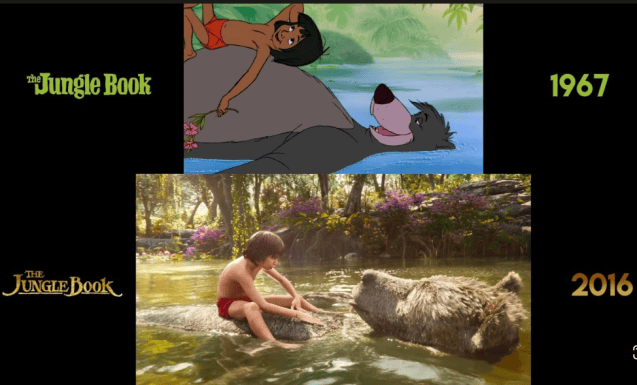
Task: Compare the movement and animation in these animated features
Select scenes from The Jungle Book (1967) and The Jungle Book (2016).
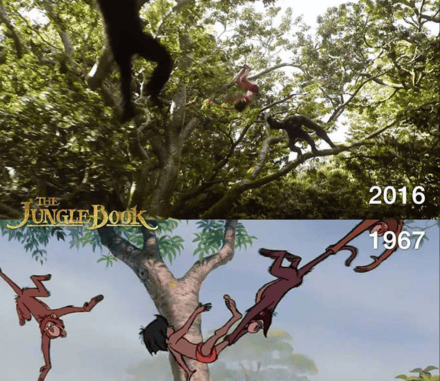
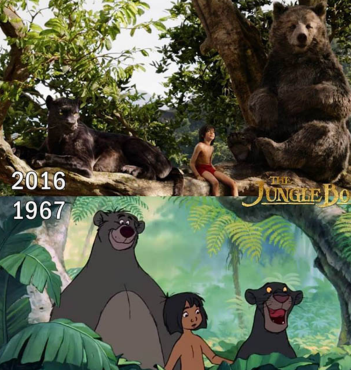
• Identify how movement is created in each version—hand–drawn vs digitally captured.
• Analyse: How do Baloo and Bagheera move differently across versions?
• Is the motion stylised or realistic? How does that affect viewer engagement?
In the original Jungle Book 1967 version it was crafted by traditional hand drawings, because it is hand drawn it can capture attributes that may not be possible to get a real animal to do or on command and could even be dangerous to really attempt. Having said this , it gives writers the creative freedom to put whatever they imagine into existence making it very stylised. The audience can easily pick up on that this is an animated picture movie – making them unphased from the fictional attributes and still able to watch the movie comfortably .In the other Jungle book movie (2016) they put real actors in motion capture suits and mark there faces in dots so the camera can capture the realism being portrayed. Even though this is then manipulated with CGI and he actors are now digitally created animals there movements are real – making this form of motion fall into the realistic category.
• Which version feels more “alive” or expressive—and why

